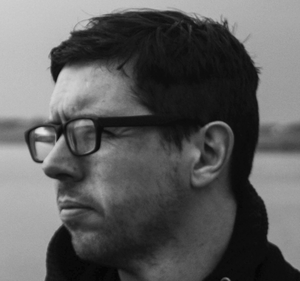
WiseNoise 04: Peter Koelman aka Brandsmith, on subscription model
"Visuals are the bare minimum. If your design doesn't solve a business problem or speak with an authentic voice, you’re just making digital wallpaper."
- Peter Koelman
It’s been a whirlwind of a season here at Wiselove Studio. Since I launched WiseNoise, I’ve had the pleasure of sitting down with some of the most insightful minds in the design world.
We’ve covered everything from New York street energy with Ewan Leckie to the analogue magic of printmaking. But my latest conversation with Peter Koelman, the founder of Brandsmith™, really pushed the boundaries of how we think about the "business" of being a graphic design studio.
Peter is one of those designers who isn't afraid to break the traditional agency model. He’s moved from the high-octane world of designing for rock bands to building a sophisticated, high-end branding powerhouse in Edinburgh. We sat down to talk about his journey, his philosophy on "meaningful" design, and why he’s betting big on the subscription-based design model.
From Rock Stages to Brand Strategy
One of the things I love most about talking to other creatives is hearing the "origin story." Peter didn’t start out sitting in a sleek office worrying about kerning for corporate clients. He started where many of us did: in the trenches of the music scene.
"I was making logos for rock bands," Peter told me. There’s a raw energy in that kind of work. It’s about identity, rebellion, and standing out in a crowded venue. But as his career evolved, he realized that the same principles of "voice" and "attitude" apply to high-end branding and logo design. Whether you’re a touring band or a tech startup, you’re trying to tell a story that resonates.
After moving to Edinburgh, Peter found himself immersed in the Scottish creative scene. Edinburgh has this unique blend of historical weight and modern innovation, which seems to have rubbed off on his work. It was here that Brandsmith™ really began to take shape: a studio dedicated to forging brands that aren't just pretty, but are built to last.
The Subscription Revolution: Design on Demand
The biggest talking point of our chat was the move toward a subscription-based model. If you’ve been following the industry lately, you’ve probably heard of "Design-as-a-Service." At Brandsmith.studio, Peter has embraced a membership model that challenges the traditional project-based quote system.
So, how does it work? Instead of the back-and-forth of proposals, deposits, and hourly billing, clients pay a flat monthly fee for a "design on demand" service. It sounds radical, and for many a traditional print design studio, it might feel a bit scary. But Peter sees it as a way to remove friction.
"It’s about speed and accessibility," he explained. In a world where businesses need to move fast, waiting three weeks for a proposal can be a death sentence for momentum. By offering a subscription, he becomes a seamless extension of his clients' teams. They get high-tier brand identity design without the administrative headache.
I asked him if this "unlimited" model leads to burnout. His answer was interesting: it’s all about the workflow. By using tools like Trello or Notion to manage requests, he keeps the process transparent and focused. It’s a model that rewards efficiency and deep understanding of a client's brand over time.
Visuals Are the Bare Minimum
One of the most profound things Peter said during our recording was that "visuals are the bare minimum." This might sound strange coming from someone who provides premium logo design services, but it’s a philosophy I’ve been leaning into more since I transitioned from Loom to Wiselove.
In 2026, anyone can jump onto a tool and generate a "nice" image. AI is everywhere. But a nice image isn't a brand. Peter argues that design must be meaningful for the business. It has to solve a problem.
"If a client comes to me for a logo, we’re not just talking about colors," Peter said. "We’re talking about where they want to be in five years. We’re talking about their authentic voice."
Authenticity is the word that kept coming up. In a digital world increasingly filled with "hustle culture" and AI-generated noise, a brand that speaks with a human, honest voice is the one that wins. Whether we are working on a small local project like the Heather Isles Coffee Co logo or a large-scale identity, that core truth has to be there.
Mastering the New Tech Stack: Framer and Spline 3D
We also geeks out on the technical side of things. Peter is a massive advocate for using modern tools that bridge the gap between design and development. Specifically, we talked about Framer and Spline 3D.
For a long time, web design felt like a compromise. You’d design something beautiful in Figma, and then it would get "lost in translation" when it went to a developer. Framer has changed that. It allows designers to build high-fidelity, interactive sites that look exactly like the vision.
But the real game-changer Peter mentioned is Spline. We’re seeing a huge shift toward 3D elements in brand identity. Being able to integrate 3D objects directly into a browser: objects that users can rotate and interact with: adds a layer of "tactile" feel to the digital experience. It’s that blend of the physical and the digital that I’m always chasing.
Why the "Generalist" is Making a Comeback
There’s often a lot of pressure in this industry to pick a lane and stay in it. You’re told to be the "logo guy" or the "web girl." But Peter’s journey suggests that being a specialist in thinking is more valuable than being a specialist in one specific tool.
His work spans from digital interfaces to physical assets. He understands that a brand needs to live everywhere: from a 16px favicon to a massive billboard. This holistic approach is why a dedicated graphic design studio still holds so much value in the age of DIY tools. We see the threads that connect the entire experience.
Finding Your Authentic Voice
As we wrapped up the episode, we talked about the importance of designers finding their own voice. Peter’s Brandsmith™ identity is a reflection of his own tastes: sharp, professional, but with an underlying "maker" spirit.
I’ve felt that same shift here at Wiselove. Whether I’m working on t-shirt designs for Rumac or thinking about the Creative Deeside mornings, I’m always trying to ensure that the work feels "real."
Peter’s advice to young designers or business owners looking for logo design services? Don't chase trends. Chase the truth of the project. If you find that, the visuals will follow naturally.
File under