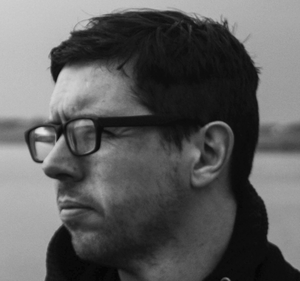
WN06: Chris Sanders on process over portfolio
Process Over Portfolios: Chris Sanders on Rebuilding, Burnout, and Design Education
If you’ve been following the journey of WiseNoise, you know I’m obsessed with the "why" behind the work. It’s easy to look at a finished piece of visual identity design and think, "Yeah, that looks cool," but the real magic: and often the real pain: is hidden in the layers you don't see.
In the latest episode of the podcast, I had the pleasure of sitting down with Chris Sanders, the founder of Right Aligned. Chris is someone who has lived through the highest highs and the most gut-wrenching lows of the design industry. From lifting heavy boxes of paper in a print room to running a successful agency, losing it all in twenty minutes during the pandemic, and then rebuilding a global community for designers: his story is a masterclass in resilience.
We talked about why the industry’s obsession with "the portfolio" is broken, how to handle the crushing weight of burnout, and why design education needs a serious shake-up.
“I didn’t have a degree… just a willingness to work.”
From the Print Room to the Studio: A Non-Traditional Start
One of the things I love most about Chris is that he didn't take the "traditional" route. There was no prestigious design degree or internship at a top-tier London agency right out of the gate. In 1999, Chris started at the very bottom: in a print room.
He wasn't pushing pixels; he was lifting boxes.
"I didn't have a degree," Chris told me. "I just had a willingness to work." That grassroots beginning gave him a perspective that many in our industry lack. He saw the tactile side of design before he ever touched a Mac. It taught him that design isn't just an intellectual exercise: it’s a service, a craft, and, at times, a very physical job.
This "no-nonsense" approach eventually led him to start his own agency. But as anyone who has tried to offer graphic design services on their own knows, the first attempt rarely sticks. In fact, Chris’s first two agency attempts failed fairly quickly. It wasn't until the third try that things really clicked.
A glimpse into the raw, behind-the-scenes reality of a working design studio.
The "20-Minute" Collapse
For years, Chris’s third agency thrived. They had a solid client base, specifically within the hospitality sector. They were doing great work, the team was growing, and the future looked bright.
Then, March 2020 happened.
"Because we were so focused on hospitality, my entire business vanished in about 20 minutes," Chris shared. It’s a terrifying thought for any business owner. One minute you have a full roster, and the next, the world shuts down and the phone stops ringing.
But instead of spiraling, Chris pivoted. While homeschooling his daughter during the lockdown, he began to realize that the design community was more isolated than ever. People were burnt out, disconnected, and hungry for something real. He saw a gap in how we talk about design. We spend so much time looking at the "polished" end result: the branding and logo design that looks perfect on a mockup: but we never talk about how we actually got there.
And so, Right Aligned was born.
Why the "Process" is Everything
If you’ve ever felt "imposter syndrome" looking at a world-class portfolio, Chris has some news for you: those portfolios are often a lie. Not that the work isn't good, but because they skip the messy, ugly, and frustrating parts of the journey.
Right Aligned was built to fix this. It’s a platform that prioritises the process over the portfolio.
"When I started, juniors only needed a willingness to learn," Chris noted. "Now, they're expected to be masters of five different software tools before they even get an interview."
This obsession with technical perfection is killing creativity. Through Right Aligned, Chris hosts talks and workshops that pull back the curtain. He encourages designers to show the sketches that didn't work, the client feedback that hurt, and the "boring" administrative tasks that actually make a studio run.
I’ve always felt that at Wiselove Studio, the best work comes from that honest back-and-forth with a client. If you’re curious about how I approach that, you can read more about introducing WiseNoise and the philosophy behind my practice.
Exploring the sketches and iterations that lead to a final visual identity.
Ethics, Accessibility, and the "Elite 1%"
One of the most refreshing parts of our conversation was Chris’s take on the "business" of design education. Most high-end design conferences and courses are priced for the elite. If you’re a solo freelancer or a student from a working-class background, a £500 ticket to a weekend talk is out of reach.
Chris decided to do things differently. Right Aligned operates on a donation-based model for live talks and keeps its courses incredibly low-cost.
"We focus on the grassroots creatives, not the elite 1%," he said. By highlighting solo practitioners, women creative directors, and designers from diverse backgrounds, he’s actively working to change who gets a seat at the table.
This commitment to accessibility is something I deeply respect. It’s about building a community that unifies people rather than creating a hierarchy. It’s the same spirit I tried to capture when talking about Island Roots and New York Streets with Ewan Leckie in a previous episode. Design should be for everyone.
Moving Beyond the Screen: IRL Events and DJ Booths
As much as we love the digital world, humans crave the tangible. Chris has been taking Right Aligned on the road with "Process" IRL events. These aren't your typical, stuffy design seminars. We're talking events held in bars, DJ booths, and unconventional spaces.
The goal? To talk about the "after-hours" side of design.
Chris spoke about how these events allow designers to shed the "professional" mask and just be human. We discussed the crossover between music and design: how the rhythm of a DJ set isn't that different from the flow of a branding project. When we take design out of the sterile office environment and put it into a social setting, the conversations change. They become more honest.
The energy of a live community event, where design meets real life.
Facing the Giant: Burnout and Mental Health
We couldn't have a conversation about the modern design industry without talking about burnout. Chris was incredibly open about his own struggles. For 23 years, he operated in "provider mode": the masculine-coded pressure to always be the one bringing in the money, fixing the problems, and never showing weakness.
But eventually, the tank runs dry.
"Running a community organisation means I actually spend very little time designing," Chris admitted. "Most of my time is spent on admin and management."
That shift can lead to a loss of identity. If you aren't "designing," who are you? Chris found solace in two things: personal manifestos and charcoal sketching.
By creating a personal manifesto, he reclaimed his "why." It gave him a set of rules to live by that had nothing to do with client deadlines. And charcoal? It’s the perfect antidote to the "command+z" world of digital design. It’s messy, it’s permanent, and it’s tactile. It forces you to be present in the moment.
It reminded me of the importance of taking a breath and looking at the bigger picture, much like the work we did for HebCelt 2025, where the connection to heritage and place was just as important as the pixels on the screen.
The Future of Design Education
As we wrapped up, Chris left me with a powerful thought: we need to stop teaching designers to be "tools" and start teaching them to be "thinkers."
Design education shouldn't just be about learning how to use the latest AI or software; it should be about empathy, communication, and understanding the "why." Whether you’re providing visual identity design or working on a small local project like the Heather Isles Coffee Co logo, the human connection is what matters most.
A simple, powerful charcoal sketch representing the 'unplugged' creative process.
Final Thoughts
Talking to Chris was a reminder that even when things fall apart, whether it’s a failed agency or a global pandemic, there is always a way to rebuild. But rebuilding doesn't mean going back to how things were. It means building something better, something more inclusive, and something more human.
If you’re feeling the weight of the industry, I highly recommend checking out Right Aligned. And if you haven't listened to the full episode yet, head over to the WiseNoise podcast to hear the whole conversation.
Thanks for being part of this community.
Drop me a line if this resonated with you: I’d love to hear your thoughts on "process over portfolios." - hello@wiselove.studio
Pearse O’Halloran
Owner, Wiselove Studio
File under