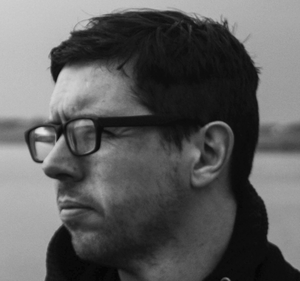
WiseNoise 09: Matt Burns
Matt Burns of Thirst joined me for a conversation about creative careers, specialist agencies, spreadsheets, and the work behind the work.
I first met Matt Burns because of a Gumtree ad (It was the LinkedIn of its day).
I’d put up a listing looking for a freelancer to help me with jobs that were too much for me to handle.
Matt answered the ad.
We met in the now-defunct Velvet Elvis in Partick, and I was well impressed with his portfolio. Brilliant ideas, beautifully crafted.
I obvsiously offered him the work, slightly apologising as it was below his skillset.
Starting again in Scotland
Matt moved from Sydney to Scotland around 14 years ago.
He described it as an “80% start again”. I liked that phrase because it captures something many creatives experience when they move country, change direction, or decide to take their work somewhere new.
You bring your skills with you.
But you still have to rebuild your network, find your people, understand the local landscape, and work out where the opportunities are.
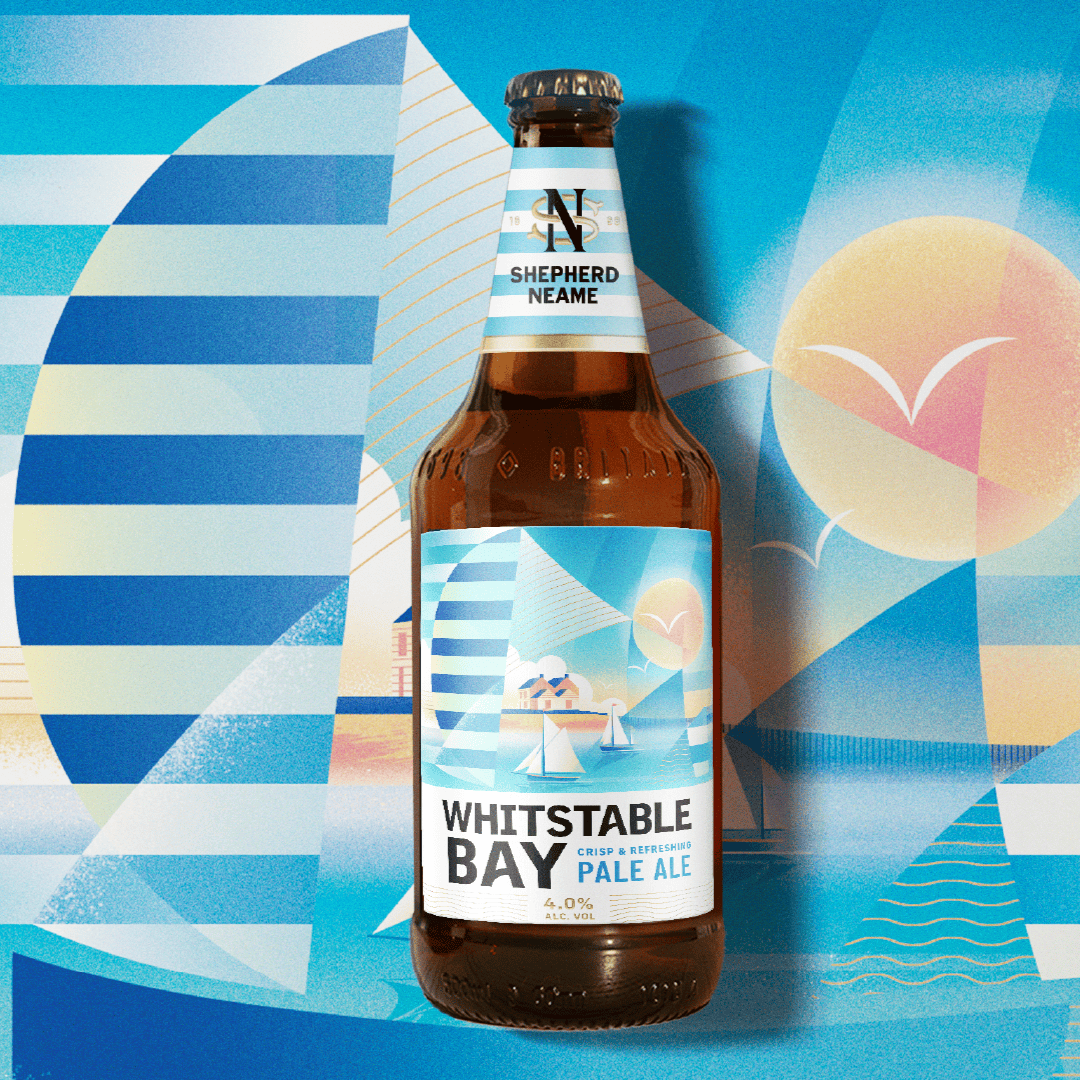
Matt had already fallen in love with craft beer and knew he wanted beer to be his focus. The problem was that you can’t simply flick a switch and suddenly become a specialist in the exact area you’re interested in.
So he made ends meet with general design work while quietly chipping away at the dream.
In his first year in Scotland, he made the only spreadsheet of his career.
It listed 44 Scottish breweries.
Matt emailed every one of them.
Three replied. Two said no. One said yes.
That one yes came from Fyne Ales in Argyll. The marketing manager, Chris, became a great mate over the next three years. They discovered that they shared a vision for what the drinks industry could be, and eventually decided to start something together.
That spreadsheet didn’t magically create Thirst. But it helped Matt find the right door to knock on.
Sometimes that’s all you need.
One opening. One person who gets what you’re trying to do. One project that turns into a relationship.
The power of letting creatives create
Matt and Chris had complementary skills, but neither of them had been shown how to be a creative director or run a business.
They learned on the job.
Or, as Matt put it, they’d been winging it “in a finer sense” for 11 years.
That feels familiar. Most people in the creative industries don’t receive a neat handbook explaining how to price work, manage clients, lead a team, give feedback, sell an idea, or make difficult decisions.
You learn by doing it. Then you learn a little more by doing it badly.
At its peak, Thirst had a team of around 16 or 17 designers. That scale brought its own challenges, but Matt kept returning to the value of having someone else run the business so he could focus on the creative work.
His advice to anyone starting an agency was simple:
“Find someone to run the business.”
It sounds obvious, but it’s not always easy to accept. Creative people often feel they should be able to do everything. Sales, finance, marketing, operations, leadership, design.
The truth is that having a strength doesn’t mean you need to own every responsibility.
A good partnership creates space. It gives each person room to do the work they’re best at.
That’s something I think about at Wiselove Studio too. I enjoy the creative process, but the best work comes when there’s enough time and trust to understand the problem properly before jumping into solutions.
Bruichladdich: progress drop by drop
Our conversation eventually turned to one of Thirst’s biggest and most meaningful client relationships with Bruichladdich.
Matt has a particularly sentimental connection to the brand. A bottle of Bruichladdich was with him through several major moments in his life: his first visit to Scotland, the birth of his first son, and the arrival of his first American client.
So being trusted to help shape the brand was more than just another project.
The strategy was built around the idea of “progress drop by drop”.
Rather than making one enormous, overwhelming leap, the team focused on marginal gains. Small, deliberate improvements across the entire whisky ecosystem.
That thinking led to a major rethink of packaging.
The secondary pack was removed. The bottle was redesigned with a smaller footprint, thinner glass, and a shorter punt. Organic inks were introduced too.
Together, those changes delivered a reported 65% reduction in CO₂ emissions from the packaging.
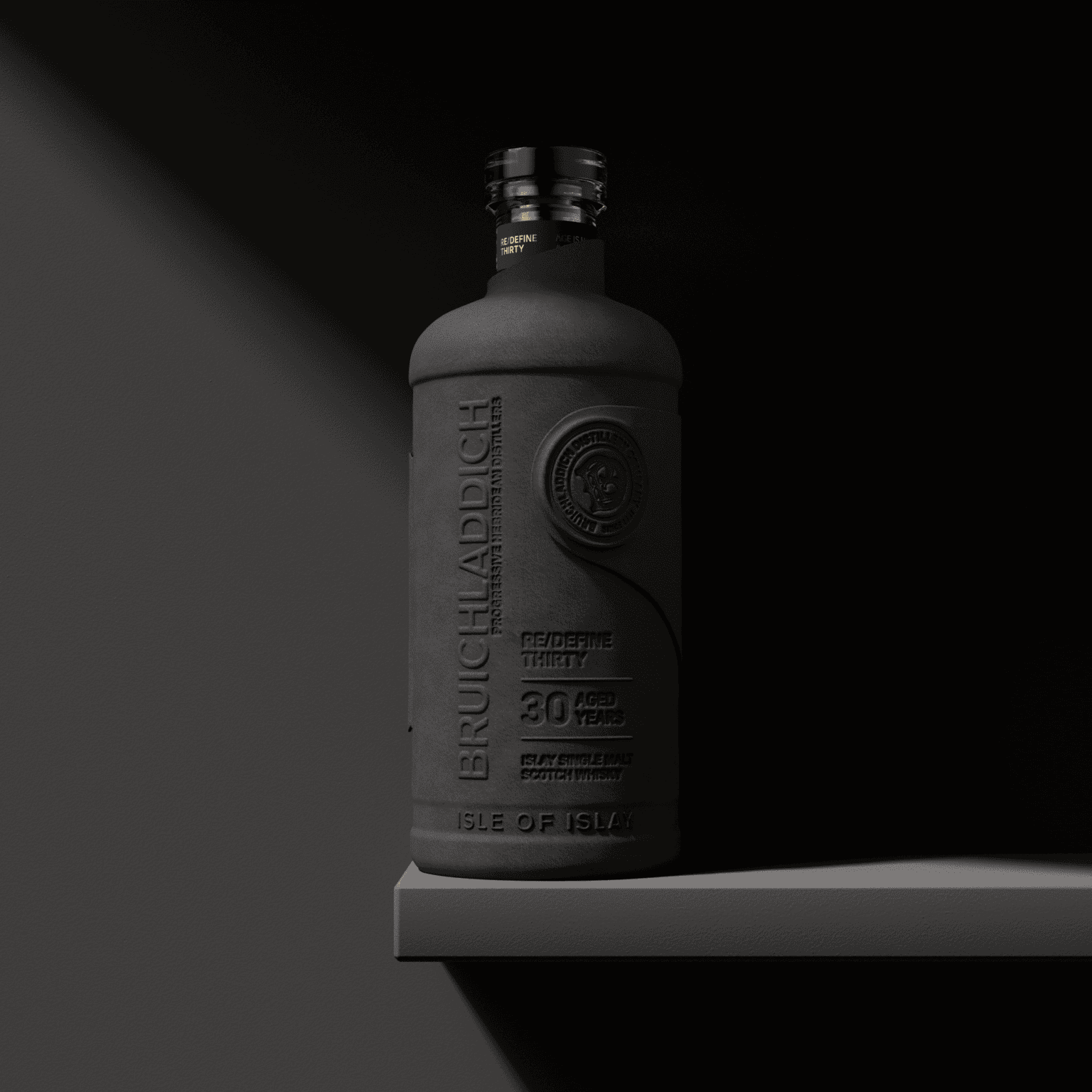
The work balances premium details with a lighter, more considered approach to packaging. See more of the project on Thirst’s website.
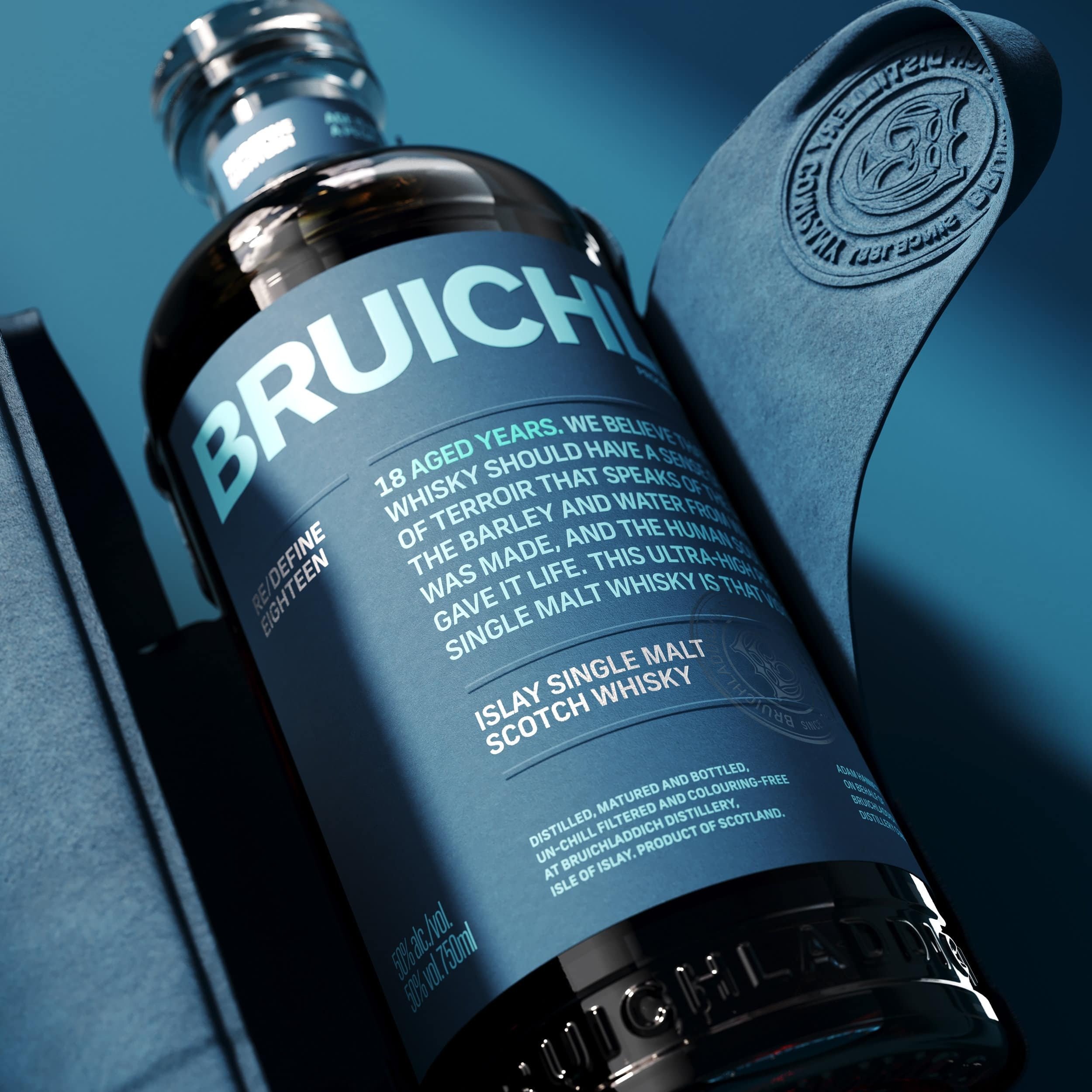
The visual identity brought another layer of thoughtfulness. Swiss typography created structure and clarity, while premium details such as embossing and engraving gave the packaging a tactile quality.
It was a useful reminder that sustainability doesn’t have to mean stripping a brand of character.
Often, it means deciding what really matters.
What deserves to stay? What can go? Which details carry meaning, and which are only there because the category expects them?

When was the last time you smiled in the whisky aisle?
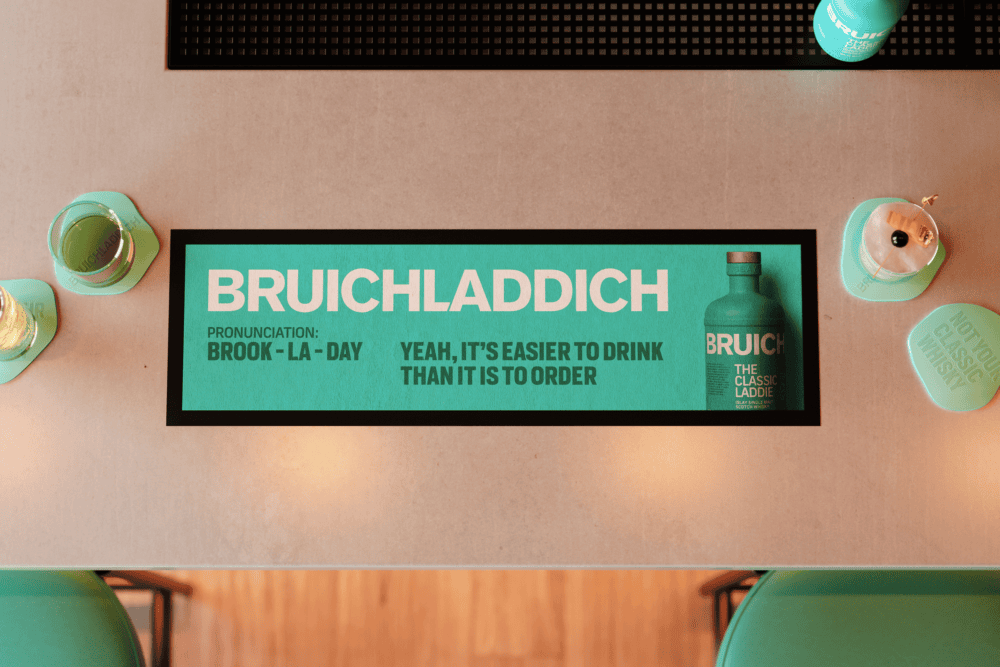
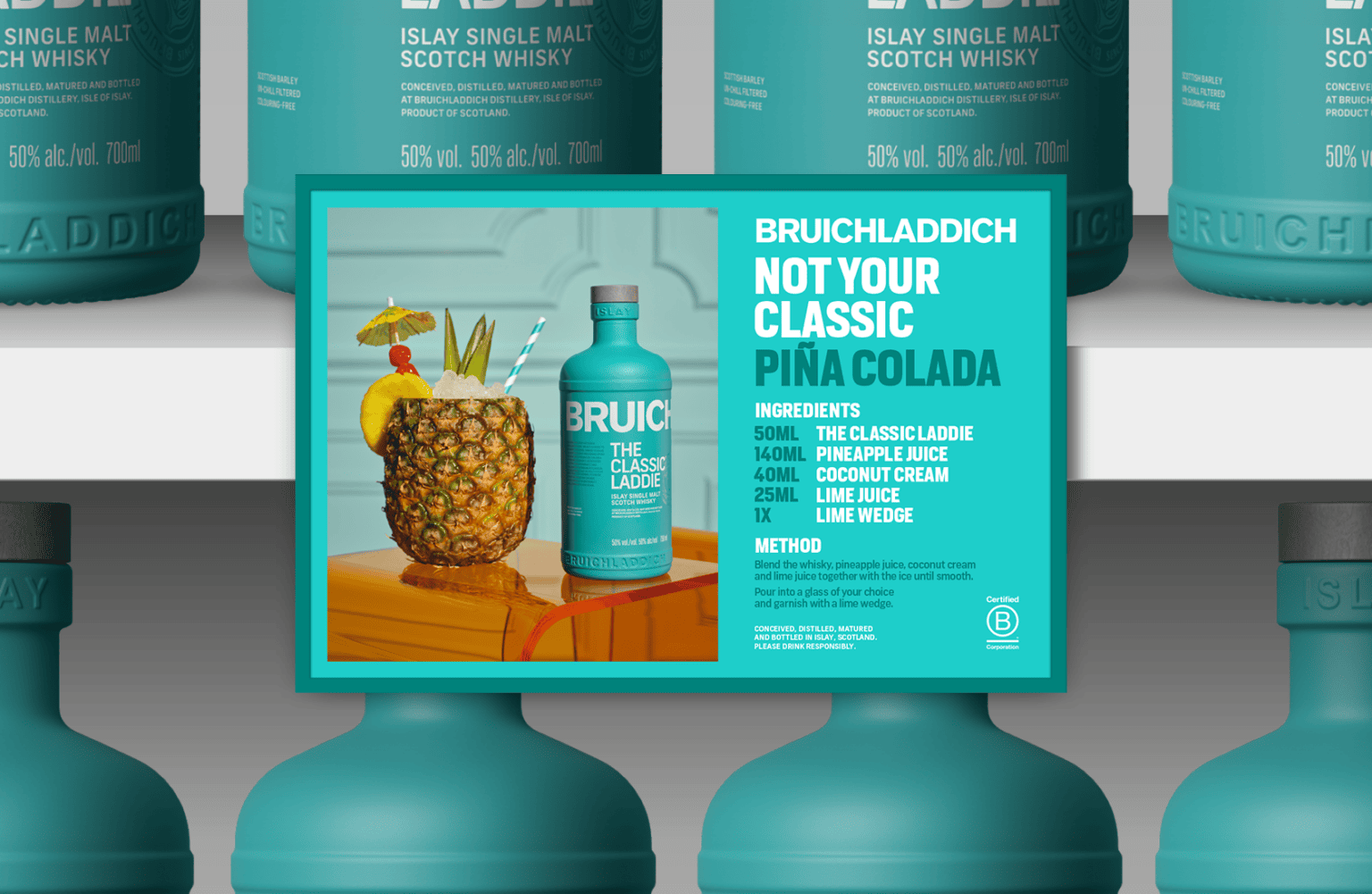
The work continued with the “Not Your Classic” campaign for The Classic Laddie.
The starting point was a brilliant question:
When was the last time you smiled in the whisky aisle?
Whisky can be a serious category. Sometimes overly serious. It can feel weighed down by tradition, rules, and an assumption that there’s a particular kind of person who drinks it.
Thirst and Bruichladdich decided to challenge that.
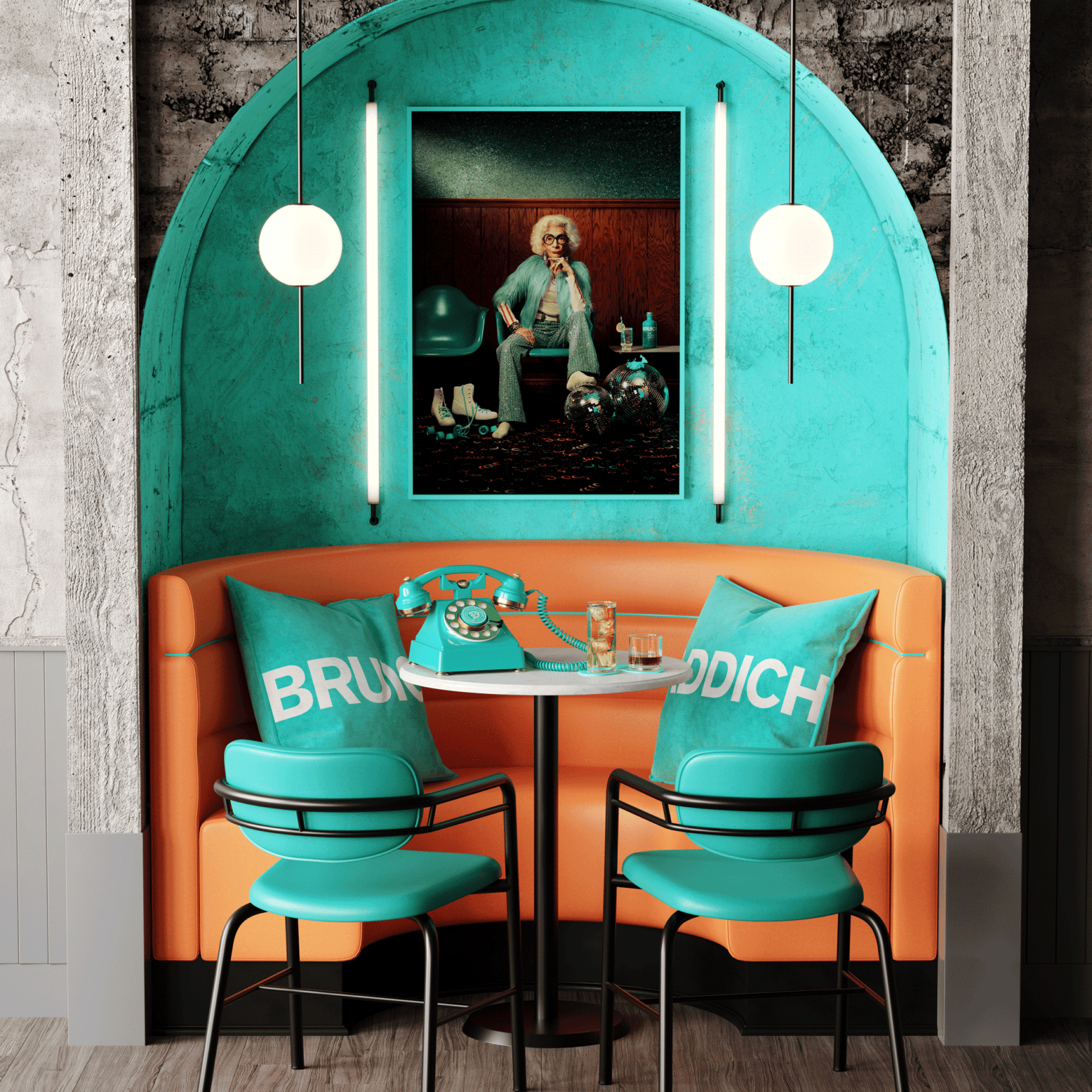
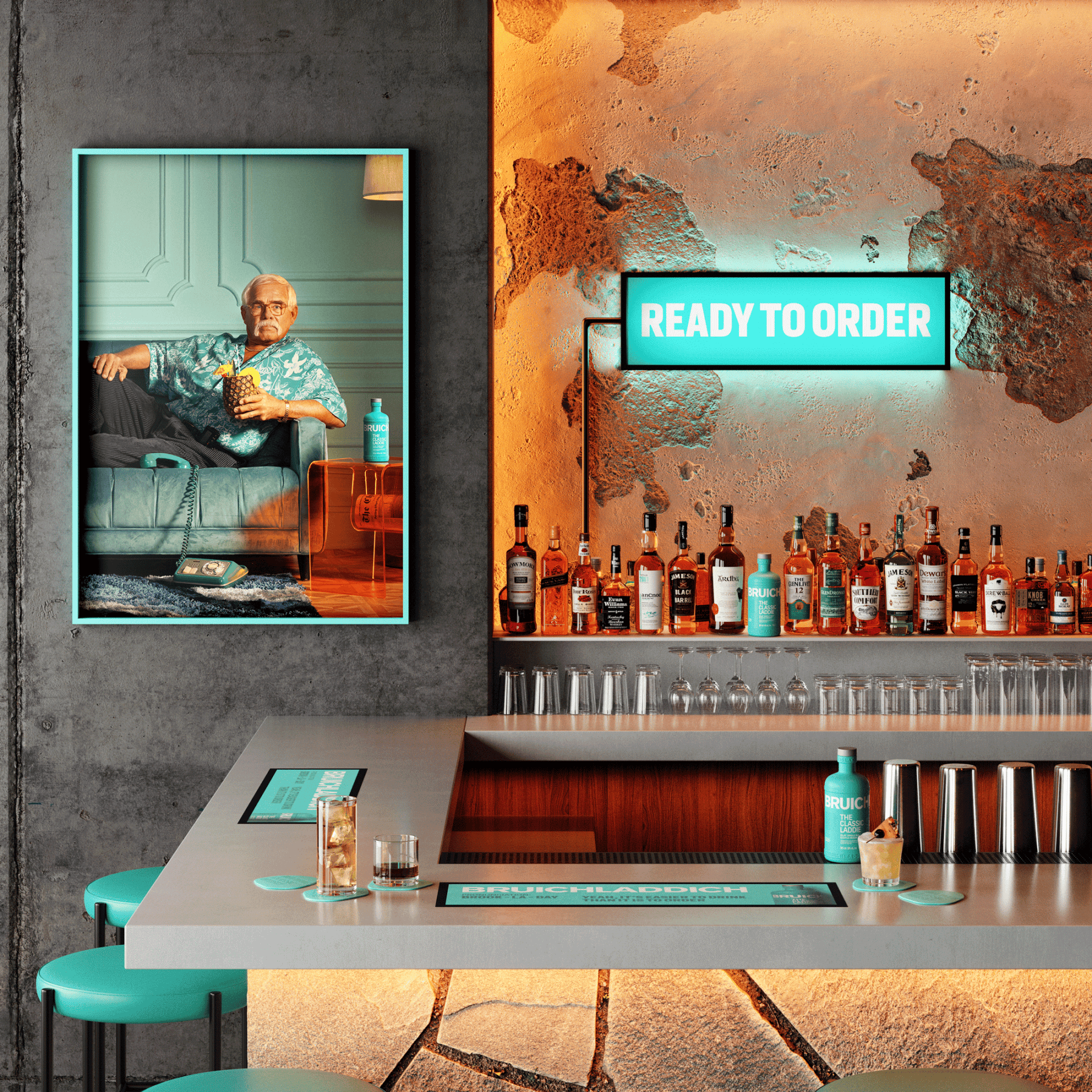
The campaign introduced a series of irreverent characters, photographed by Los Angeles-based photographer Justin Bettman. There was a woman enjoying herself at a roller disco. A man drinking whisky from a pineapple. Characters who brought energy, humour, and a sense of possibility to the category.
The campaign used humour and unexpected characters to make whisky feel more open and inviting.
The point wasn’t to make whisky less sophisticated. It was to make the category feel more human.
That distinction matters.
Good creative work doesn’t always simplify the product. Sometimes it simply removes the unnecessary barriers around it.
You can read more about the thinking behind Bruichladdich’s “Not Your Classic” campaign.
The campaign questioned the old assumptions about who whisky is for.
Rethinking luxury
The next challenge was the luxury line.
Matt talked about pairing the age statement of the whisky with a philosophy, rather than allowing the number on the bottle to do all the work.
The packaging followed the same principle of considered progress.
The team developed what was described as the world’s first 100% paper pulp mould wrapping around a spirit bottle. It used dyed recycled paper pulp, with no glue and no magnets.
It was designed to feel premium without relying on excess.
That’s a difficult balance. Luxury packaging often adds more material, more weight, more decoration. Here, the materials had to do less while communicating more.
The result shows that sustainability and desirability don’t need to sit on opposite sides of the table. With the right idea, the environmental decision can become part of the beauty.
Sustainable Packaging News has a useful overview of the Luxury Redefined project, including the moulded paper packaging and the thinking behind it.
The wider Bruichladdich work uses restraint, mystery, and material detail to create a distinctive world.
Heavy Dessert: selling the work
For Heavy Dessert, Matt picked the specialist-versus-generalist question, along with the things they never tell you in design courses.
On specialism, his view was nuanced.
Finding a specialism is useful. It helps people understand what you do and why they should come to you. But you still need enough breadth within that specialism to solve different kinds of problems.
Thirst began with beer and expanded into anything liquid. Then it added brand strategy, innovation, and omnichannel thinking.
That feels like a sensible way to grow. Start with a clear point of view, then build the capabilities needed to serve the work properly.
The other big lesson was about selling.
Presenting and selling creative work is huge. Yet it’s rarely taught properly.
A brilliant idea won’t be bought if the client doesn’t believe in the person presenting it. Meanwhile, an average idea can win if it’s delivered with enough confidence, clarity, and conviction.
Matt’s advice was to make the conversation objective rather than subjective. Root the work in truth. Refer back to the client’s own words in the brief.
And believe in what you’re showing.
If you don’t believe in the work, the client can smell it.
His line stayed with me:
If clients don’t buy something that’s right, it’s on you for not making them believe it.
That doesn’t mean pretending every idea is perfect. It means being mature enough not to show work you don’t believe in just to fill a concept quota.
The work has to matter to you before you can ask someone else to invest in it.
Give the right idea room to grow
Matt’s story is a good reminder that creative careers rarely follow a straight line.
Sometimes you need to take the small jobs while you work towards the right ones. Sometimes a spreadsheet is enough to start a conversation. Sometimes the client you’re looking for is one “yes” hidden among 43 noes.
And sometimes the best thing you can do for your creative work is find someone who can take care of the business side.
I had a blast talking to Matt. His story is full of useful lessons, but it’s also full of patience, friendship, and a belief that good work can shift an industry one thoughtful decision at a time.
You can listen to this episode and find more conversations in the WiseNoise podcast archive.
Cheers, Matt. Slàinte mhath.
- Pearse
____________
File under