WiseNoise 10: Tegan & Charlotte
I’m joined on this episode of WiseNoise by Tegan McDougall and Charlotte, the inaugural winners of the Wiselove Studio Emerging Talent award at the Gray’s School of Art degree show in Aberdeen.
I set up the award after visiting the show and seeing the incredible range of work produced by the graduating class. As a middle-aged designer who spends a lot of time dealing with the commercial side of the job, print deliveries, invoices, getting paid, and all the other necessary admin, it was refreshing to be surrounded by people who made work simply because they cared about it.
There was so much hunger and curiosity in the room.
It reconnected me with my own love of communication design. That feeling of having an idea, following it wherever it leads, and making something real.
That’s what I wanted to celebrate with the award.
The degree shows grind
Before we got into the projects themselves, we talked about the reality of getting a show ready for a degree.
It wasn’t just a case of pinning up a few final pieces and heading home.
There was a painting in the hall. Painting the floor. Meeting submission deadlines. Trying to finish coursework while watching everyone else put their work up around you.
Tegan described the panic of feeling behind while the show slowly came together.
Have I done enough, or have I done too much?
Charlotte remembered the same pressure. By that point, everyone had spent months putting everything into their final projects. They were tired, not sleeping properly, and still had an entire exhibition space to prepare.
Then came hand-in day.
The stress gave way to a huge sense of relief, followed by an adrenaline rush at finally seeing everyone’s work come together. After four years of studying together, they could finally step back and appreciate how far the whole group had come.
That collective feeling was one of the things I loved most about the show. It wasn’t just a collection of individual portfolios. It felt like a snapshot of a group of young designers finding their voices.
Charlotte-Ann: stumbling into communication design
Charlotte-Ann grew up in France, where art wasn’t really part of her school experience. The focus was largely on scientific subjects, and her family included engineers and architects.
There was an assumption that she might follow a similar path.
But Charlotte-Ann had always been drawn to making things. She was a visual learner, loved drawing, and eventually decided to study visual communication at college in Aberdeen. She chose the city partly because her mum had grown up there.
She was meant to stay at college for two years, but applied to Gray’s a year early because she was getting bored.
That decision changed everything.
Charlotte said she more or less stumbled into communication design. It wasn’t a carefully plotted career plan. She tried an art course because she liked being creative, then gradually found the subject that felt right.
By the second year, she had fallen in love with it.
That feels familiar to me. Creative careers often begin with a vague instinct rather than a five-year plan. You try something. You follow a hunch. You notice what keeps your attention.
Then, eventually, you realise you’re exactly where you’re meant to be.
Fille: making venting creative
Charlotte’s degree project, Fille, grew from her dissertation on the male gaze in modern media.
Old lad magazines, particularly Loaded, were a major reference point. But the project was also rooted in everyday experiences of sexism and being underestimated.
Charlotte told me about working as a tour guide in a distillery and being repeatedly second-guessed by male visitors, despite being trained to do the job.
None of these moments might seem enormous in isolation. But they accumulate.
Fille became a way of turning that frustration into something creative, funny, and accessible.
Charlotte wanted to approach feminism without creating a barrier for people who might feel intimidated by the politics or language around it. Instead of presenting a lecture, she created a world where people could laugh, vent, learn, and feel heard.
The magazine is only one part of the wider project. It includes:
A curated magazine of articles and photography
A zine called Fille Culture, covering food, books, films, activism, and the pink tax
A section exploring why Charlotte chose not to use pink in the branding
Parody “stupid hotline” numbers, flipping the sex-line adverts found in old lad magazines
A photographic reversal of the usual naked-woman imagery, featuring a male friend who works out
A website with a “vent of the day” animation
A community section where people can share experiences without judgement
A blackboard at the degree show where visitors could write down their own stories
Fee used humour, print, digital design, and participation to create a broader conversation.
What struck me was how fully the idea had been considered. It wasn’t just a magazine with a strong cover. It was a complete identity and experience.
The visual language came from street art and graffiti. Charlotte used marks she found around Aberdeen, including a heart with wings and a “Hello, my name is Vera” tag: Vera being her grandmother’s name. Berlin graffiti and street culture also fed into the work.
She talked about being inspired by film props and the work of MinaLima and Annie Atkins. There’s something special about holding a designed object in your hands. It can feel more immediate and memorable than something that only exists on a screen.
That physical quality came through in Fille. The print design, photography, collage, website, and exhibition elements all felt connected.
It was political, but never preachy.
And it was very funny.
Tegan, football, and finding the next step
Tegan’s work was one of the first projects to stop me in my tracks at the degree show.
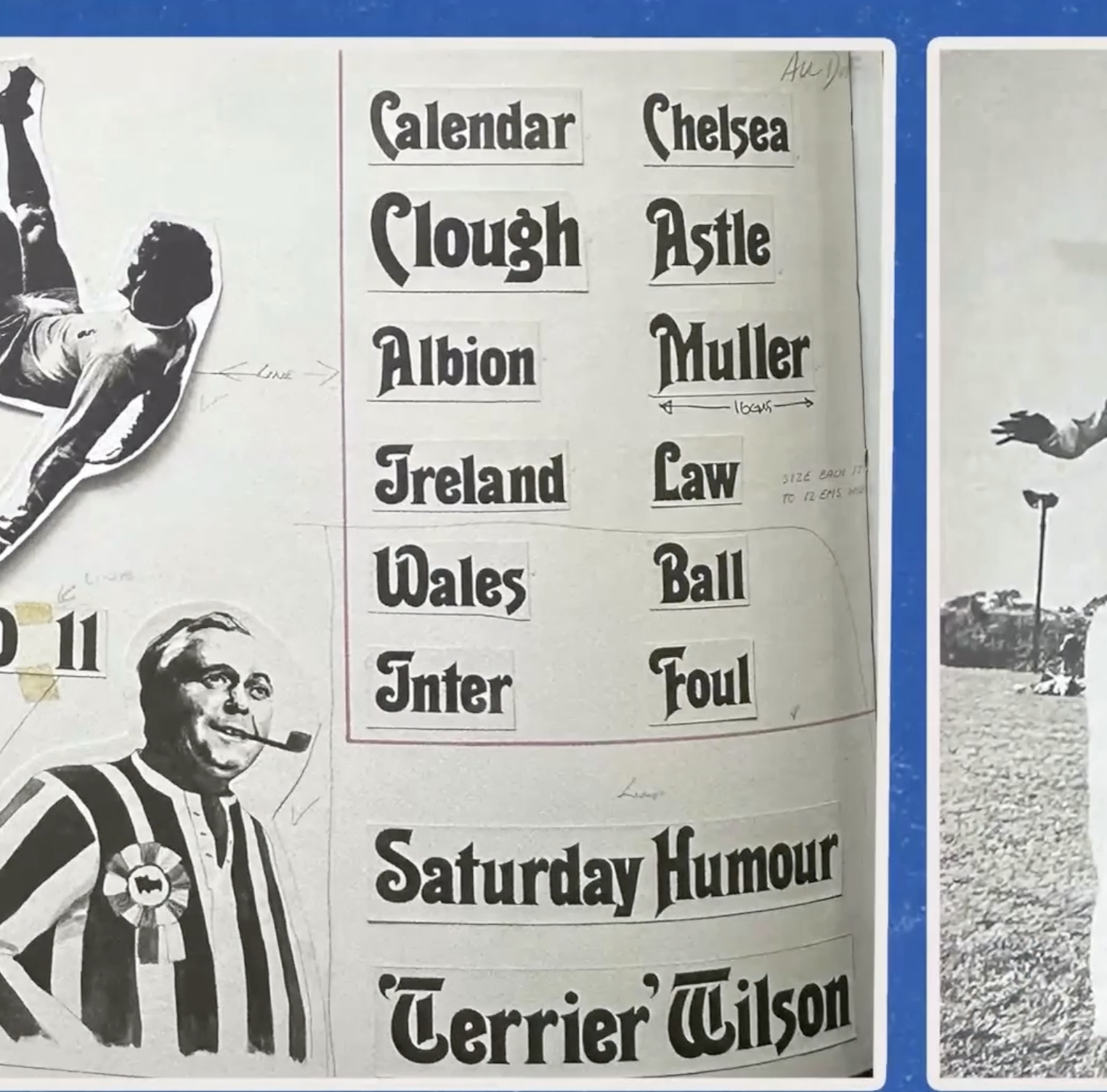
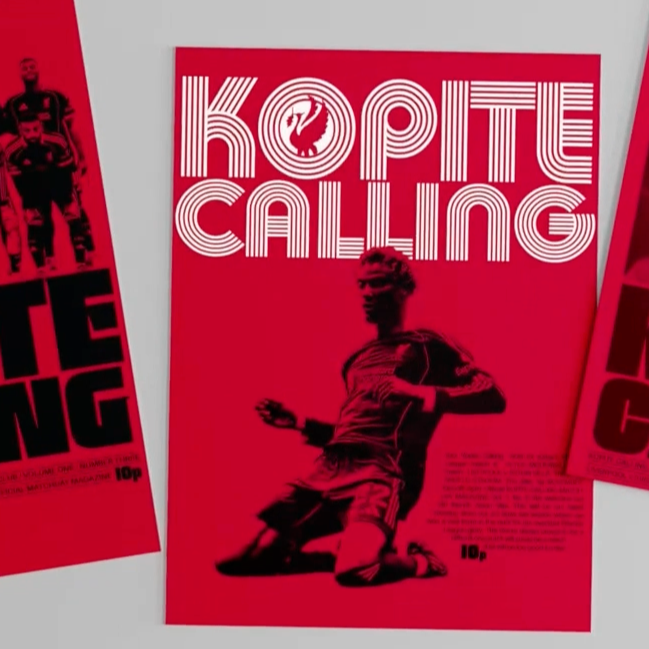
I’m a sucker for customised football scarves, which initially drew me towards the project. But I stayed because the work had real depth. The typography, layout, research, and attention to detail were consistent throughout.
The project had a warm, nostalgic relationship with football and its sense of community, while still feeling contemporary. That balance is difficult to achieve. It’s easy for “retro” to become a surface treatment, but Tegan had clearly researched the visual language of football programmes from the 1960s and 1970s and understood what made it work.
The bold cover was great, but the quieter pages mattered just as much.
That’s often where a project proves itself.
Tegan is heading into a master’s program next year, while also considering the challenge of entering the industry. Gray’s gave her and her classmates valuable internships, events, and exposure to working designers, but the transition from education into professional life still feels daunting.
I understand that.
There’s a strange mixture of excitement and uncertainty at that point. You’ve never been more eager to design, but you’re also trying to work out where you fit and how the industry is changing around you.
The AI question
Naturally, we also talked about AI.
Tegan’s view was refreshingly measured. AI is a tool. You don’t have to use it, but it exists and will probably become part of the industry in different ways.
Some agencies are using it to create rough ideas, fill gaps in presentations, or give a client a quick sense of direction. That doesn’t necessarily mean it becomes the final work.
For Tegan and Charlotte-Ann’s class, the emphasis has been on making, physical connection, and people-focused design. Most of them wouldn’t instinctively turn to AI first.
That came through clearly in both of their projects.
Fille depends on real stories, found marks, printed objects, and participation. Tegan’s work is rooted in research, craft, and the culture surrounding football.
There’s a value in taking the time to make something properly.
As a graphic design studio and print design studio, that’s something I care about deeply. Technology can help us explore possibilities, but it can’t replace attention, judgement, or the human reason behind a piece of work.
The Bingo Wheel of Wisdom
Charlotte-Ann also took on the WiseNoise Bingo Wheel, with some excellent answers.
Her hardest area of design? Typography.
She’s right that it doesn’t get talked about enough. Typography is difficult. Charlotte had recently completed a typography course and had struggled with getting serifs right, so she needed a break from them.
For now, it’s sans serif all the way.
Her favourite place is Moray, or “whisky country” : peaceful, but still with a strong sense of community.
Her sandwich of choice is tuna mayonnaise.
Her film is Dirty Dancing, which she described as overrated for the wrong reasons and underrated for others. I’m still thinking about that one.
Charlotte-Ann was also preparing to move back to France before heading down to London in September. Her desk, meanwhile, is complete chaos.
A familiar creative condition.
Celebrating emerging talent
I had a brilliant time talking with Tegan and Charlotte-Ann. They’re both thoughtful, funny, and clearly hungry to keep learning.
Their work reminded me why I wanted to establish the Wiselove Emerging Talent award in the first place. The best student projects aren’t simply polished exercises. They carry a point of view. They show curiosity, care, and a willingness to follow an idea beyond the obvious answer.
That’s what I saw in Fille and in Reimagining Football.
Congratulations again to both of them, and to everyone who contributed to such a strong degree show.
All the best for the next chapter, Tegan and Charlotte-Ann.
- Pearse
file under